
Searching Montgomery County Criminal Dockets
Start with the free Montgomery Search Docket. It pulls up dockets by a chosen setting date. A last name narrows the list. That field is optional, though. Leave it blank and you get the whole day's docket for that date. Check that the page shows County 03 before you trust the results. This tool is calendar help only. It was not built for deep historical searches by party or case number.
Need more? Just One Look sells paid case-by-case access, and Alacourt.com runs on subscription. Both cover Criminal and State Traffic records. You can also inspect records free at the Montgomery County Circuit Clerk's office. A thorough docket search may combine the date list, a broader case product, the clerk counter, and a phone call when the electronic record looks thin.
- Decide whether the case is in District Criminal, Circuit Criminal, or a municipal court.
- Check the free setting-date list and use the optional last-name field only when it helps.
- Use Just One Look or Alacourt.com when the full Case Action Summary is needed.
- Read the court identity, full case number, status, events, and newest setting as separate fields.
- Call or visit the Circuit Clerk for a missing case, free inspection, or an official copy.
Bring the complete case number whenever you have it. The court assigns that identifier, and guessing the rest of a Montgomery County number from a partial entry will not work here.
Montgomery County Criminal Docket Path
A Montgomery County felony can leave footprints in two courts. The case starts in District Court. That court handles initial processing and any preliminary hearing a defendant requests. Skip the hearing, and the county's official explanation says the case is automatically bound over after 30 days. Request one, and the District judge weighs whether the evidence supports moving the matter forward. A grand jury then votes on an indictment. Remember that an indictment is an accusation. It is not a conviction.
Once indicted, the case lives on the Circuit Criminal docket. That shift makes the court label and case number matter a great deal. An old District entry may be a stepping stone, not the final word. The official District Criminal division page shows where this early, limited-jurisdiction work happens.
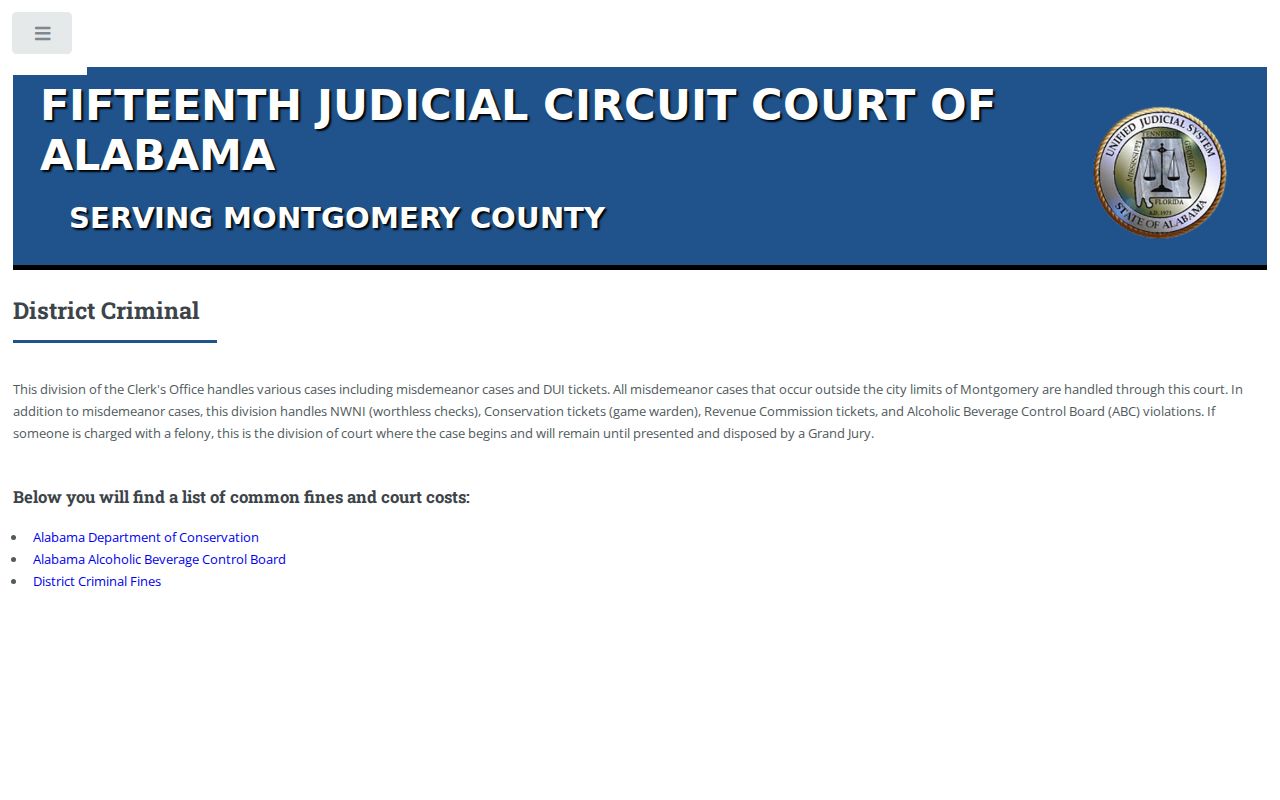
That division page explains the split. A felony lookup can begin in District Court before a Circuit Criminal record becomes the main docket.
Inside a Montgomery County Criminal Docket
Read a Montgomery County criminal docket in layers. Check the header first. Confirm the county, court, case number, case type, and current status there. Next, keep the party and lawyer fields apart from the event history. The Case Action Summary lists court actions and rulings in the order they happened. Settings, financial history, and document images sit nearby in the record. But each answers a different question.
| Header | Full case number, Montgomery County court, type, and current status. |
|---|---|
| Participants | Prosecution and defense roles, with representation when the public record supplies it. |
| Events | Case Action Summary entries, court actions, motions, orders, and rulings. |
| Settings | Arraignment, plea, pretrial, trial, sentencing, or review dates as entered. |
| Financial | Public costs and financial history, read apart from the case result. |
| Documents | Images or attachments available under product permissions; restricted items stay unavailable. |
| Disposition | Ruling, status, and sentencing entries that must be read in context. |
A summary line is just an index entry. It is not the signed filing behind it, nor a word-for-word transcript. Paid document images are not automatically certified clerk copies either.
Montgomery County Criminal Docket Terms
In a Montgomery County criminal docket, small wording gaps carry big meaning. Read the whole entry before judging by one word. The county's Circuit Criminal material defines several useful terms, and the Case Action Summary shows where each one falls in the case.
- Indictment
- A grand-jury accusation that advances a felony case. It is not a finding of guilt.
- Arraignment
- The appearance at which the formal charge is addressed and a plea is taken.
- Nolle prosequi
- The prosecution's formal choice not to proceed with a charge at that time, subject to law and order.
- Disposition
- The recorded result or status resolving a charge or the case.
- Continuance or reset
- A move from an earlier setting to a later one. The old entry stays in the history.
For the process behind these entries, the Alabama Rules of Criminal Procedure library is the official rule source.
That library gives legal context. The Montgomery County criminal docket stays the case-specific chronology.
How a Criminal Case Moves
Follow a Montgomery County criminal docket from oldest entry to newest. An early charge entry tells you nothing final. Arrest-related entries do not either. Instead, spot the court tier. Then confirm the status, and pair each motion with its later order. Keep plea and trial entries separate from disposition and sentencing. An appeal can stretch the history past the trial court's ruling.
Montgomery County docket flow: Filing › Arraignment › Pretrial › Plea or Trial › Disposition › Sentencing
Treat this as a reading aid. Not every case shows every stage. A dismissal, nolle prosequi, transfer, or appeal can bend the path. When entries clash, the newest valid one beats an older setting.
Montgomery County Criminal Judge Dockets
Each Montgomery County Circuit Criminal judge runs an individual docket. Notices go to counsel once counsel is appointed or retained. They no longer go to the defendant. That local practice makes the assigned judge and the latest setting central to any search. A broad date list can help you find the matter. Still, the case record and the current notice beat it when a date changes. The Montgomery Circuit Criminal division names the main felony and appeal docket.
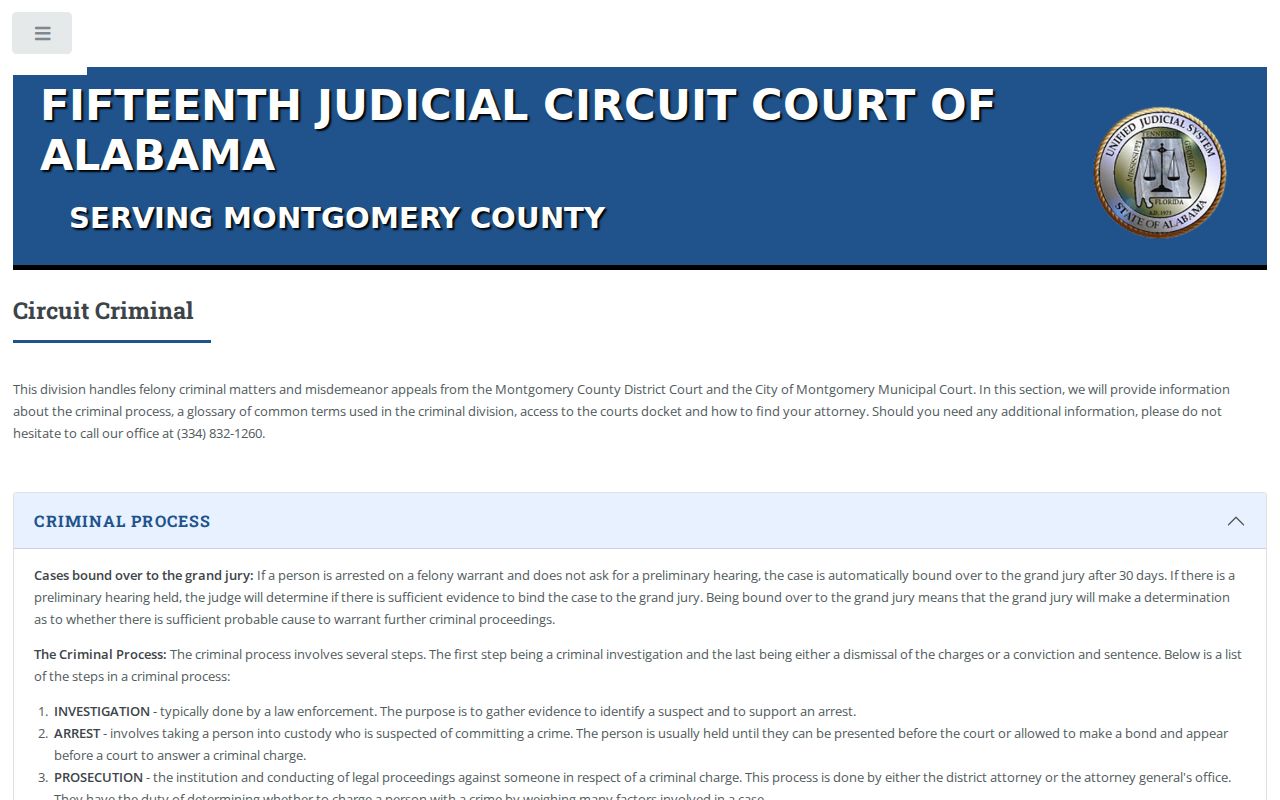
The division's official material also lays out the criminal process that the Montgomery County Case Action Summary records.
Need to confirm a setting? Read the newest notice or order first. Then check the most recent docket setting. If the two conflict, call the assigned court with the full case number and both dates instead of guessing which one governs.
Courts That Hold Criminal Dockets
Two county courts split the criminal docket load in Montgomery County. District Criminal Court takes misdemeanors charged outside the Montgomery city limits. It also handles DUI cases, worthless-check filings, Conservation tickets, Revenue Commission tickets, and Alabama Alcoholic Beverage Control violations. Felonies also get their first procedural steps there. Circuit Criminal Court picks up a felony once it is indicted. It also hears misdemeanor appeals coming up from District Court or from the City of Montgomery Municipal Court.
Anything tied to a city ordinance or city traffic ticket stays in Municipal Court. An appeal can move it onto a Circuit docket. The magistrate and warrant office sits elsewhere in the county process. A warrant inquiry there will never replace reading the criminal docket itself. The official magistrates and warrants page spells out that separate channel and what it covers for warrant questions.
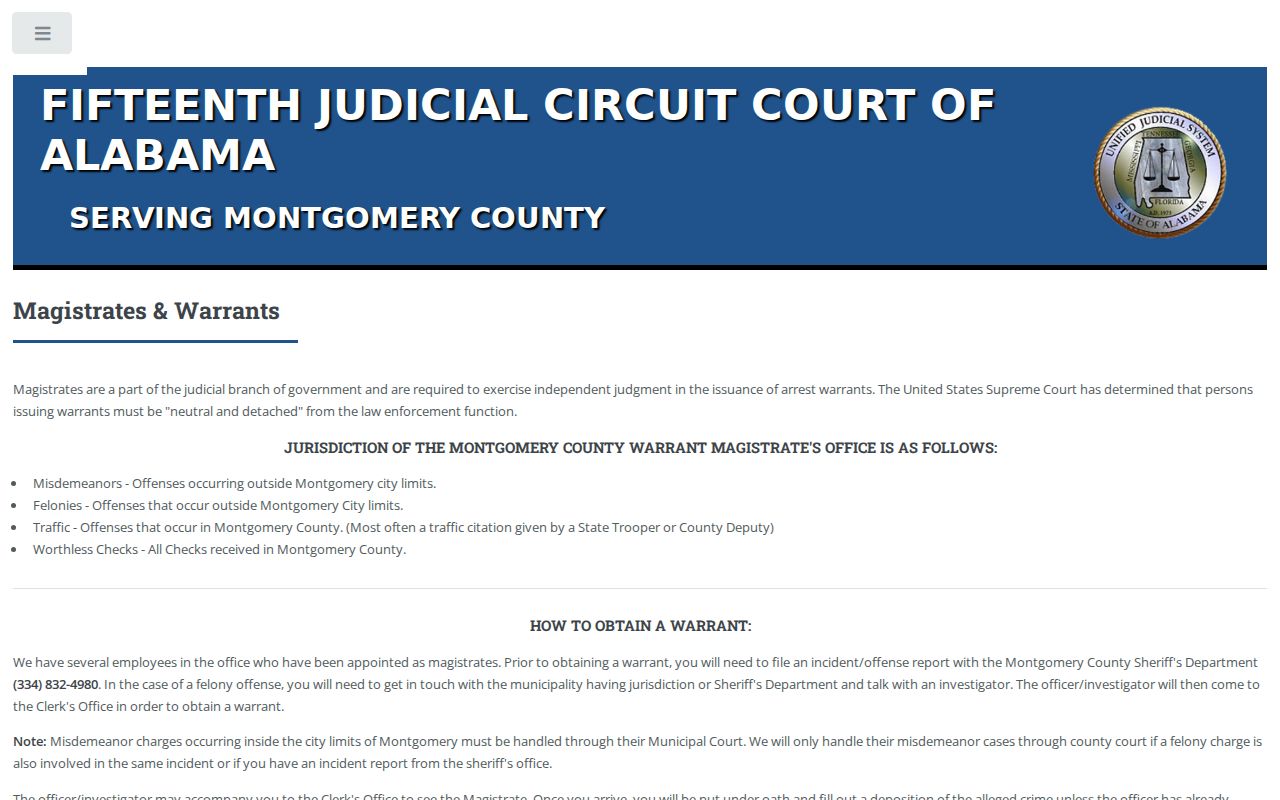
Use that page to route warrant questions to the right office. For District and Circuit criminal proceedings, the Circuit Clerk stays the record keeper.
Montgomery County Criminal Docket Discovery
Discovery does not live in the Montgomery County Circuit Clerk's record. The official Circuit Criminal explanation states that it flows through counsel instead. So when a Case Action Summary notes that discovery occurred, expect the entry alone and not the exchanged material. The docket logs the procedural event. It does not convert everything the parties traded into a public filed image.
Transcripts work the same way. A transcript is the court reporter's word-for-word account of a proceeding. The Case Action Summary is just the clerk's event list. Contact the assigned court for the reporter's information when you need one. Give the case number, hearing date, proceeding, and the portion you want. Exhibits, discovery, transcripts, and docket images each sit with a different keeper. So never assume one office holds them all.
The Montgomery Family Court page shows the same principle from another angle. Specialized and protected case categories carry their own access limits.
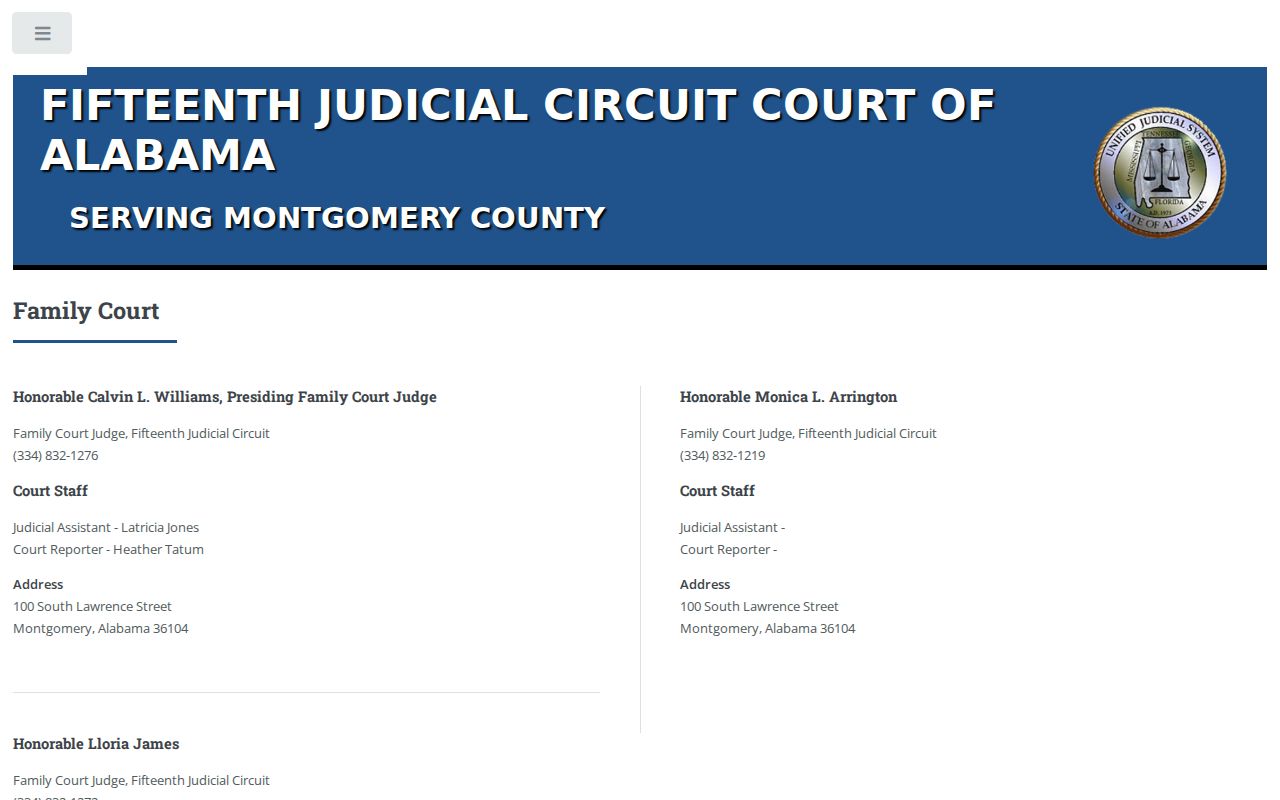
That division structure also carries a lesson for docket readers. A missing public image never proves that no court event took place.
Sealed Dockets and Public Access
You can view Montgomery County District and Circuit electronic dockets free at the clerk's office during regular hours. Remote access is narrower and runs through statewide paid or subscription products. The Montgomery County Circuit Clerk sits at the Phelps-Price Justice Center, 251 South Lawrence Street, Montgomery, AL 36104. Call 334-832-1260; published hours are 8:00 a.m. to 5:00 p.m. Monday through Friday.
Public access still has boundaries. A record might be redacted, confidential, sealed, expunged, juvenile, or covered by youthful-offender limits. Those terms mean different things. A blank online result proves none of them. The real cause may be a search run in the wrong court, a file that was never made electronic, an incomplete setting tool, or a case still too early in the process.
Key rules:
Alabama Rules of Court-Record Privacy and Confidentiality, Rules 2 through 5 set the public-viewing, confidentiality, copy, and remote-access framework.
Alabama Rule of Judicial Administration 33 governs access to electronic court data while preserving lawful clerk-office inspection.
Alabama Code Section 36-12-40 provides a right to inspect and copy public writings, subject to express exceptions and court-specific rules.
Missing Montgomery County Criminal Dockets
A Montgomery County criminal docket fails to appear. That is rarely a verdict on the case. Before changing the name you search or assuming any outcome, check the custodian. A city matter may still sit in Municipal Court. A felony can linger between District processing and a Circuit indictment. Older files may never have gone electronic. Protected treatment under a rule, statute, or order is possible too, though a blank result alone cannot tell you that.
Call the Montgomery County Circuit Clerk at 334-832-1260. Provide the court level, the division, the full case number if you have it, the public case style, and the rough year. Ask directly whether the matter falls outside the portal's coverage, is archived, sits with another court, or is subject to an access rule. A counter visit gets you free electronic viewing. To order a copy by mail, confirm the division, quoted cost, accepted payment, postage, and return instructions first.
Best next step: Treat a blank search as a routing problem until the clerk confirms the correct Montgomery County court and access channel.